
Becoming the Role Model
1st Degree black belt THesis by Arnav Dhole
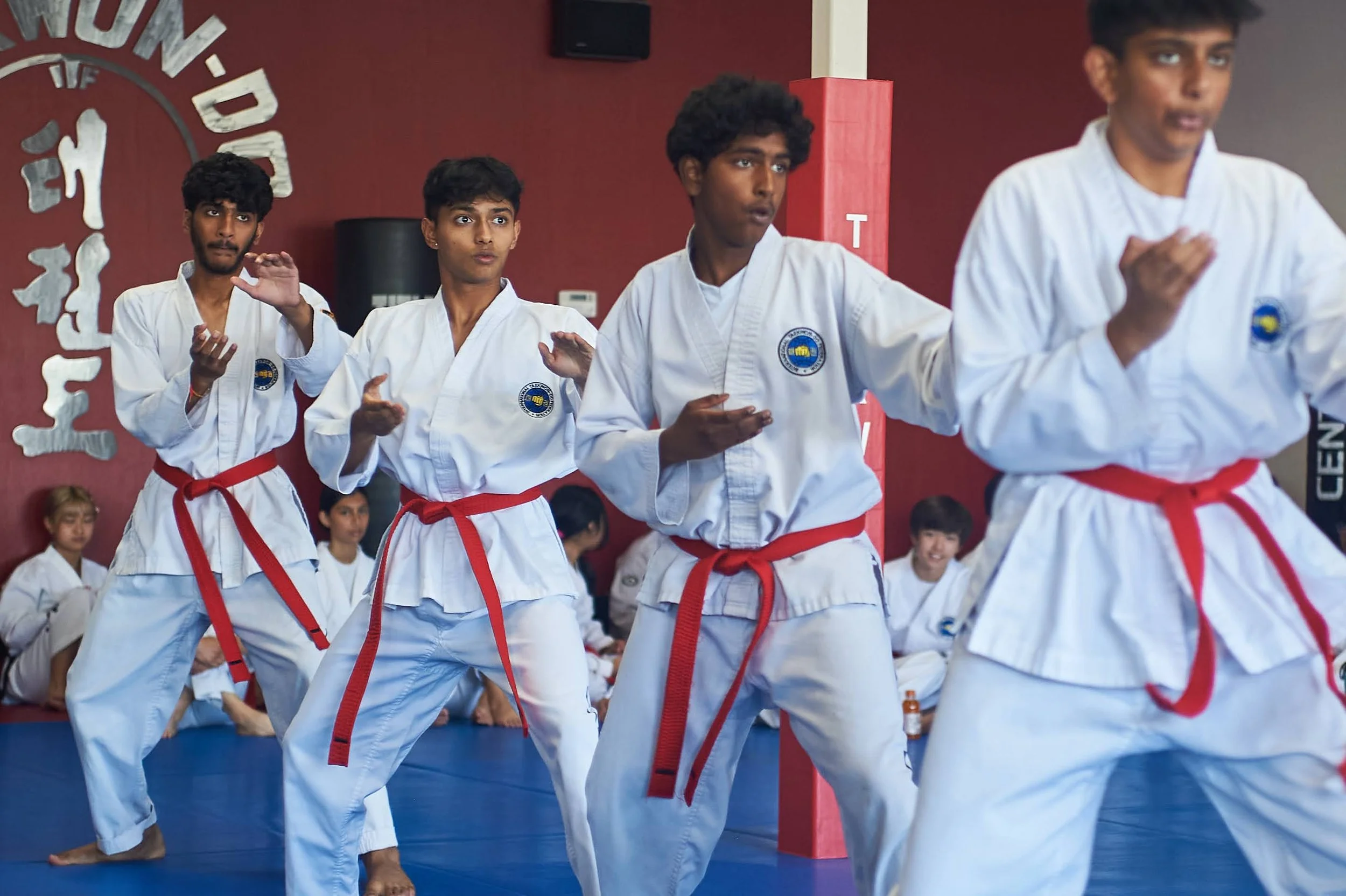
When I was seven, my family moved from India to Pennsylvania. Then Virginia when I was eight. Fremont when I was ten. Finally, Pleasanton when I was fourteen. Each move meant starting over, finding new friends, figuring out where I fit in. By freshman year of high school, I was tired of always being the new kid. That's when I decided to join the local taekwondo do-jang. I figured if I was going to keep moving around, I might as well learn something that would let me feel confident anywhere and give me a chance to be part of a community for once. Every evening from 7 to 8 pm, I practiced kicks, patterns, and sparring. After a few months, I finally had a group of people I could call friends.
The summer of my junior year, I went back to India to visit family. While I was there, I began looking for things to do and stumbled upon the Avani Foundation which was helping kids in rural areas get access to education. I got in touch with them, hoping to help them out with their cause, and got the opportunity to drop by one of their impact centers. When I visited the Rajendranagar slum, I heard stories that reminded me why my family had left India in the first place. Kids dealing with abuse, forced into labor, living in situations where they had no way to protect themselves. I realized these children could really benefit from learning basic self-defense. The confidence and skills I'd gained from taekwondo could actually help them. So I asked if I could start teaching them some simple techniques. The foundation agreed, and I became their taekwondo instructor for the next three weeks.
I started with the basics - proper stance, how to make a fist, simple blocks. Many of these kids had never done any kind of structured physical activity before, so I had to break everything down into tiny steps. I learned that teaching requires a completely different kind of patience than learning. When a ten-year-old couldn't get the footwork right for a basic front kick, I had to findthree different ways to explain it before something clicked. Some days I'd spend the entire hour just working on one technique, watching each kid practice it over and over until they felt confident enough to try it at full speed. Other days I would guide them through self defense scenarios, watching them get more and more comfortable with the techniques I demonstrated as they laughed with their partners. What struck me most was how quickly their confidence grew once they got the hang of even the simplest moves. Kids who started the class barely making eye contact were soon volunteering to demonstrate techniques in front of everyone. I taught them basic escape methods for if someone grabbed their wrist, how to create distance if they felt threatened, and simple strikes they could use if absolutely necessary. But more than the physicaltechniques, I was teaching them that they had the right to defend themselves and that they were stronger than they thought. Those classes changed everything for me. What started with thirty kids grew to fifty-five as word spread. I watched quiet, nervous children start to speak up and ask questions. One of my most memorable students, eight-year-old Zoya, went from hiding behind her older sister to helping demonstrate moves to new students that joined us. By the end, when my students sat around me and gave speeches about what they'd learned, each one talked about teaching these skills to their friends and siblings back home.
That experience made me realize taekwondo could be so much more than just finding my place in a community. It could be a way to help other people find their own strength and confidence. These kids taught me that the techniques I'd been learning had real value beyond just making me feel more secure or giving me friends to train with. It had changed the way they thought about self defense and in turn had given me a reason to become a better taekwondo practitioner. I wanted to be better for myself, but also so that I could help others learn. So this past summer, when I started doing assist hours to fulfill my requirements, I helped with the 5 and6 pm classes filled with younger students by using everything I learned about patience and teaching. I found myself using the same approach: breaking down complex techniques into smaller parts, finding different ways to explain the same concept when a kid wasn't getting it, and celebrating small victories to build their confidence. Working with these younger students has taught me that being an instructor means being able to read each student's needs and adjust accordingly. Some kids need encouragement, others need gentle correction, and some just need someone to believe in them. The experience from India gave me the foundation, but these assist hours have been showing me how to refine those skills and apply them consistently.
Now when I train, I think about becoming the kind of role model to other students that inspires them to stick to it. Helping my brother prepare for his tests and his competitions, I use the same patience and persistence I've developed to help him do the best he can. Getting my black belt represents more than just mastering techniques or reaching a certain rank. To me it means being prepared to help people who might need these skills the way those kids in India did, or the way I did when I was constantly moving and looking for a place to belong. The black belt is my goal because I want to be ready to teach and help others find their own strength, whether they're kids in difficult situations who need to learn how to protect themselves, or just young students who need someone patient enough to help them build confidence one technique at a time.